How CBT Helps to Rewire ADHD Brains For Success

For people that have ADHD the gap between knowing exactly what to do and actually doing something can feel like a heavy burden. Often, individuals level this as a lack of willpower, in reality it is much more technical on a subconscious level. It isn’t that people do not want to work, it comes down to the brain’s system is overloading under the weight of the task.
Cognitive Behavioural Therapy (CBT) is designed not as a cure, but as strategy for. Unlike some therapies that dive deep into childhood history, CBT is generally focused on the “here and now.” It treats mental health by providing practical tools to manage current problems. Medication targets the brain’s chemistry, while CBT helps us to see the narrative we tell ourselves. For people who are navigating events in the world, our internal monologue is often the worst enemy.
People often fall into cognitive distortion, which are irrational though patters that are designed to keep us stuck in a cycle of procrastination.
Nouse and Mitchell (2015) highlight that “all-or-nothing thinking the belief that if an event plan isn’t perfect, it’s a failure—is a primary driver of ADHD paralysis. CBT teaches us to catch these thoughts in real-time, replacing a shame-filled narrative with a logical reframe: “I’m overwhelmed because this task is complex, not because I am incompetent.” This shift in thinking is the essential precursor to physical action. Once we stop the emotional haemorrhaging caused by self-criticism, we can utilise practical behavioural tools like the 5-Minute Rule.
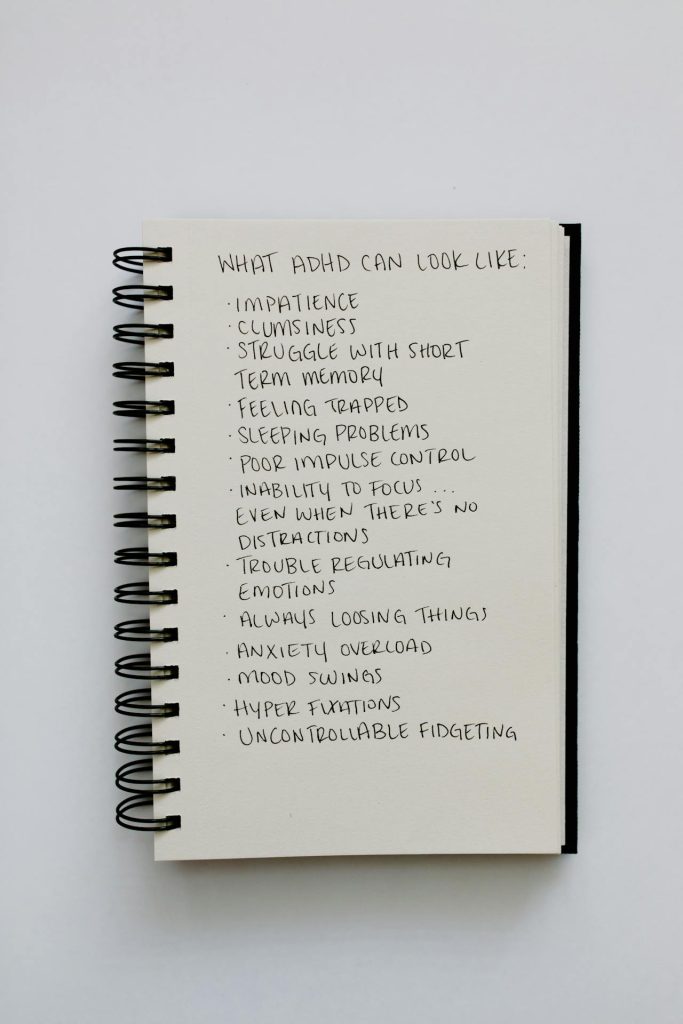
Safren et al. (2017) emphasise that breaking tasks into “micro-segments” is vital because the ADHD brain struggles to visualize the steps required for long-term goals.
When we look at an event task that feels too massive to touch, the brain’s amygdala treats it like a physical threat and shuts down. By committing to just five minutes of work, we lower the “Wall of Awful.” Usually, once that initial friction is overcome, the brain’s reward system engages, allowing the momentum to carry us through the guest list or floor plan.
However, even with momentum, the ADHD brain often struggles with “Time Blindness,” a deficit in non-verbal working memory. In event planning, where every minute counts, underestimating a task’s duration is a recipe for disaster.
CBT addresses this by moving plans out of the unreliable mind and into External Scaffolding. Ramsayer (2022) notes that individuals with ADHD benefit significantly from “prosthetic” environments—using external cues like time-blocking or “Cognitive Anchoring.” By linking a stressful task to an existing habit, such as reviewing vendor contracts while drinking morning coffee, we create a visual map that the ADHD brain can actually navigate.

While medication targets the brain’s chemistry, CBT targets the specific cognitive patterns that lead to avoidance. For those of us navigating the high-octane world of events, our internal monologue is often our own worst enemy.
We frequently fall into Cognitive Distortions, which are irrational thought patterns that keep us stuck in a cycle of procrastination. Knouse and Mitchell (2015) highlight that “all-or-nothing thinking”—the belief that if an event plan isn’t perfect, it’s a failure—is a primary driver of ADHD paralysis. CBT teaches us to catch these thoughts in real-time, replacing a shame-filled narrative with a logical reframe: “I’m overwhelmed because this task is complex, not because I am incompetent.”
However, even with momentum, the ADHD brain often struggles with “Time Blindness,” a deficit in non-verbal working memory. In event planning, where every minute counts, underestimating a task’s duration is a recipe for disaster. CBT addresses this by moving plans out of the unreliable mind and into External Scaffolding.
Perhaps the most transformative benefit of CBT for those in the events industry is Emotional Regulation. Events are high-stakes and socially intense; when a vendor cancels at the last minute, the “old” ADHD response might be a total meltdown or complete withdrawal. CBT provides a buffer by teaching “Self-Soothed Problem Solving.” Research by Solanto (2011) suggests that practicing meta-cognitive skills—thinking about your thinking—allows you to acknowledge frustration without letting it drive the car. Instead of reacting impulsively to the chaos of a shifting schedule, you learn to pause, breathe, and pivot to the next logical step.
Ultimately, CBT doesn’t change the core of who you are; it simply builds the guardrails that allow your creative, fast-moving brain to stay on the road. It turns the “Ferrari engine” of the ADHD mind into a precision instrument. Whether you’re organizing a massive festival or just trying to survive your own holiday party without a panic attack, CBT is the toolkit that makes the “impossible” feel like just another item on the list. By changing the way we think, we finally change the way we show up for the world.